Larnach Castle – a Celebration of Victorian Excess

I have to admit a fascination for the Victorian era. Industrial innovation, scientific advancement and exploration made for a heady mix of momentous change. And how those successful nouveau-riche Victorians loved to flaunt their newly-minted wealth!

One such man was William Larnach, who built New Zealand’s only castle in 1871. If you are in Dunedin, I’d highly recommend a visit. According to their website (https://www.larnachcastle.co.nz/), “It took more than 200 workmen three years to build the Castle shell and master European craftsmen spent a further 12 years embellishing the interior.”

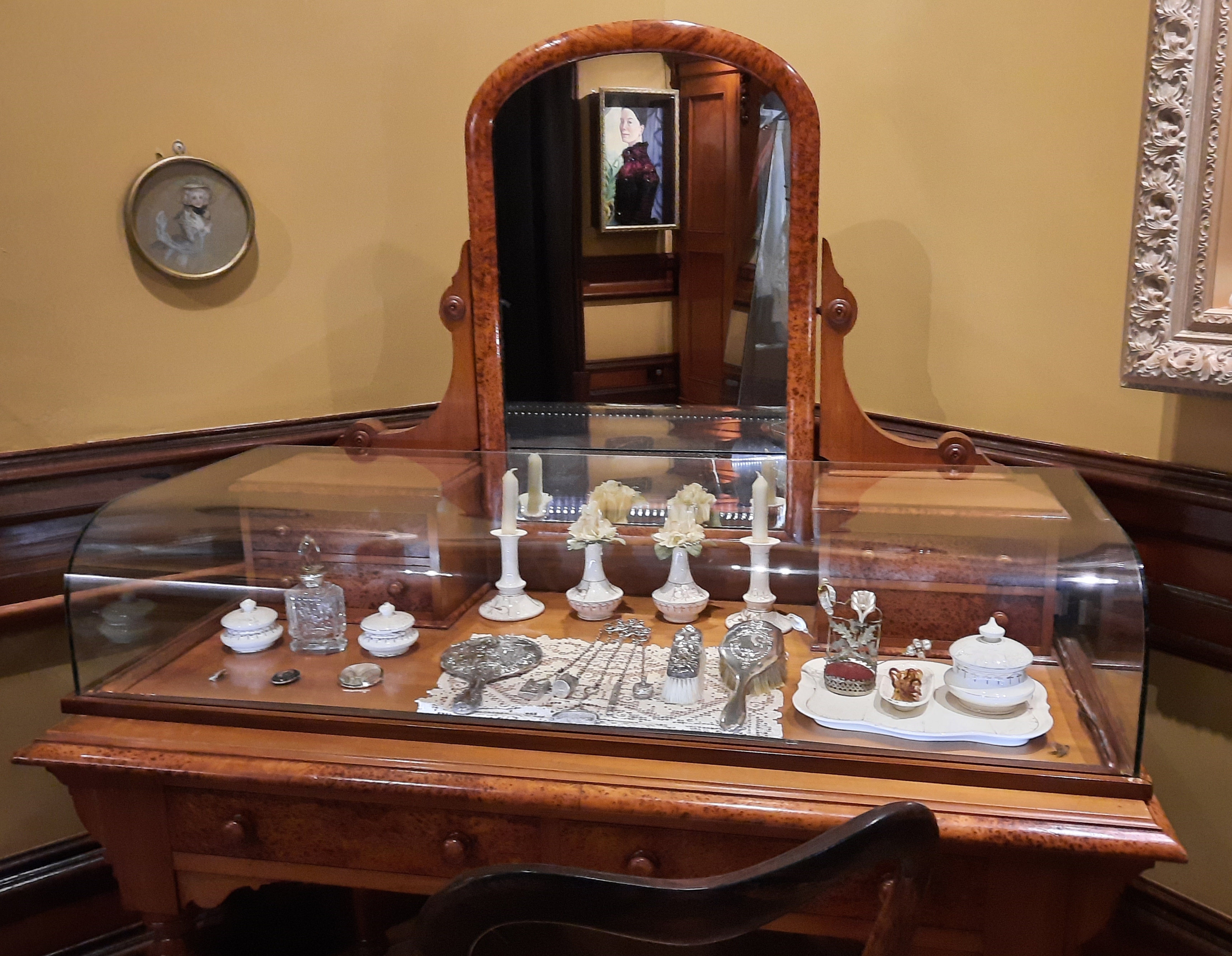
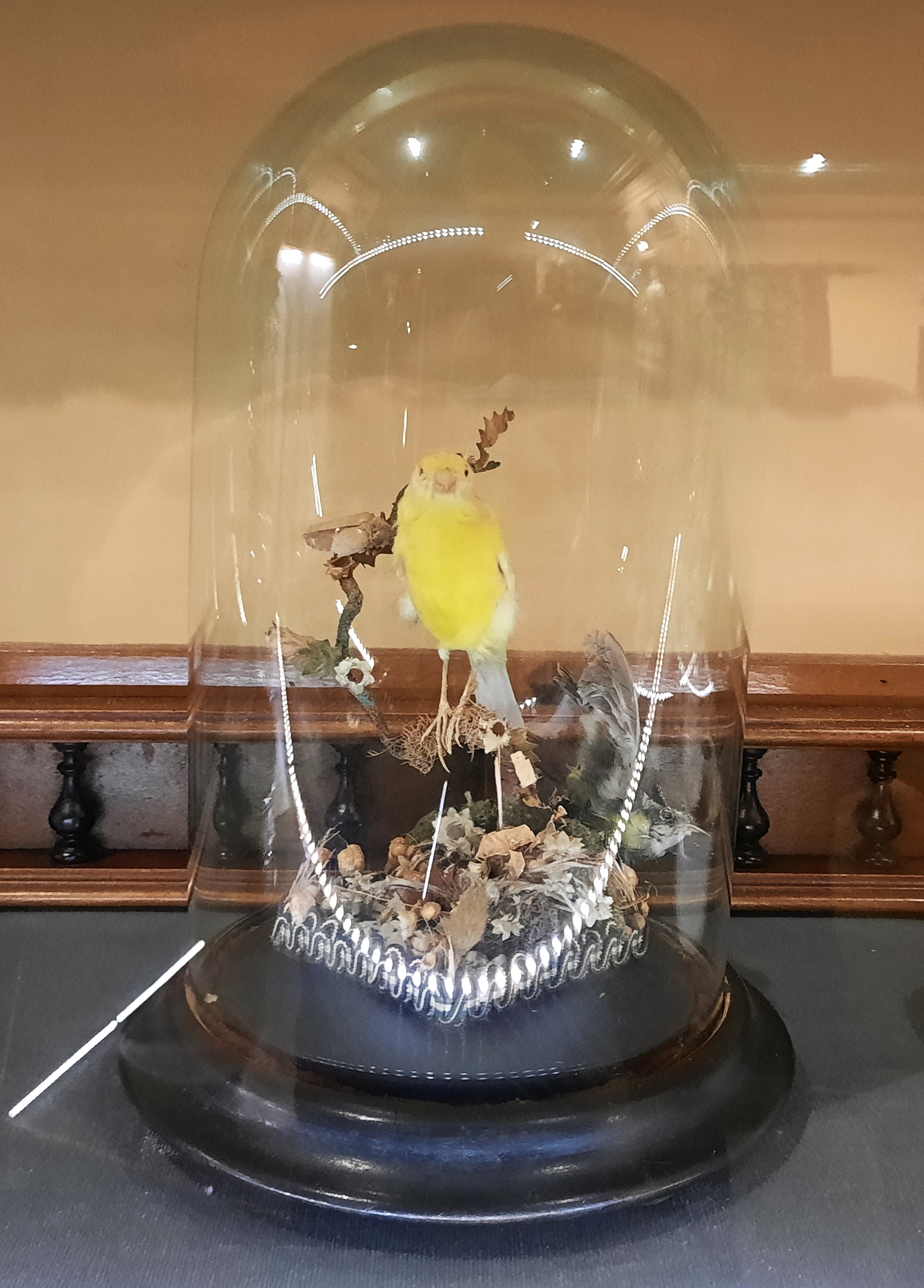
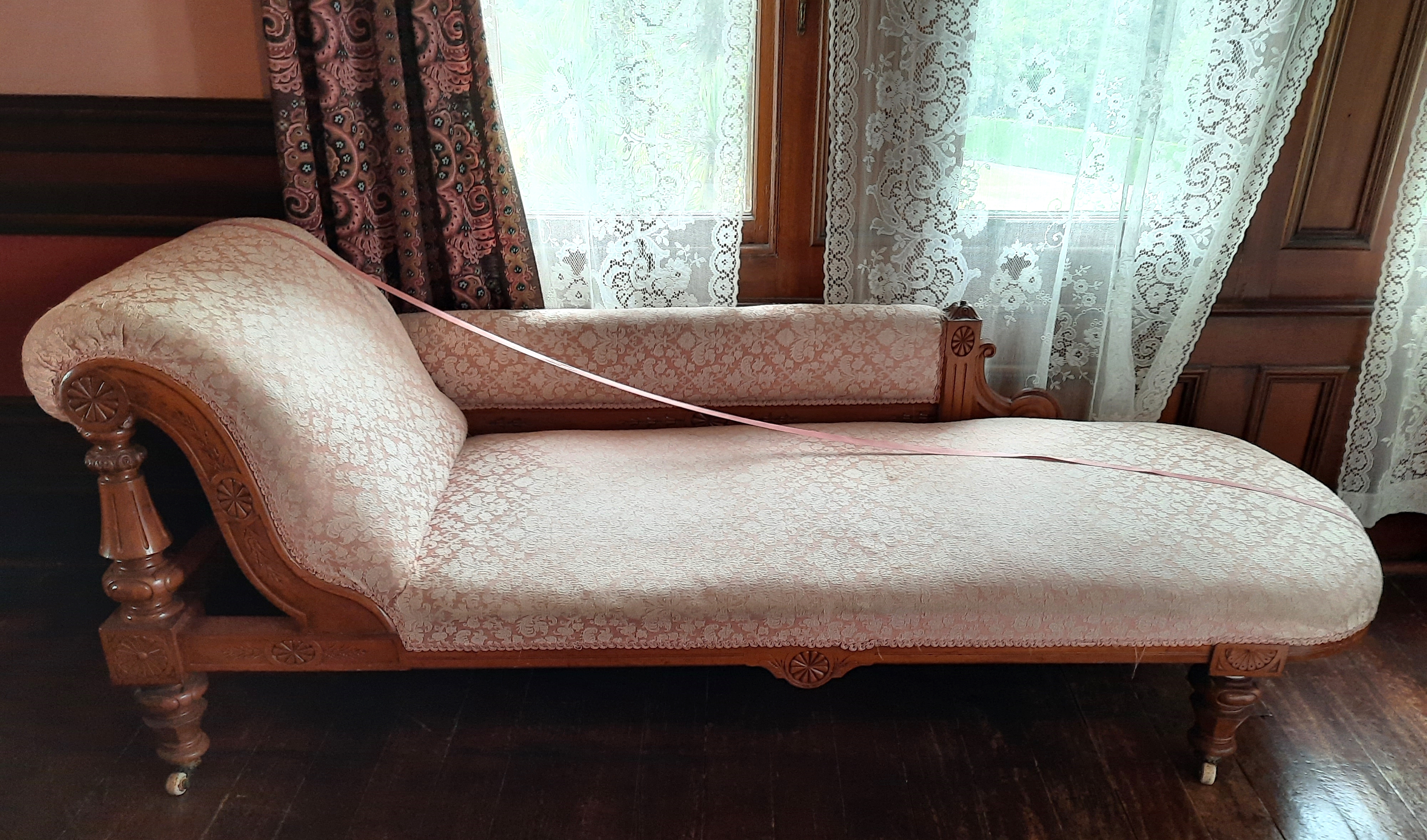
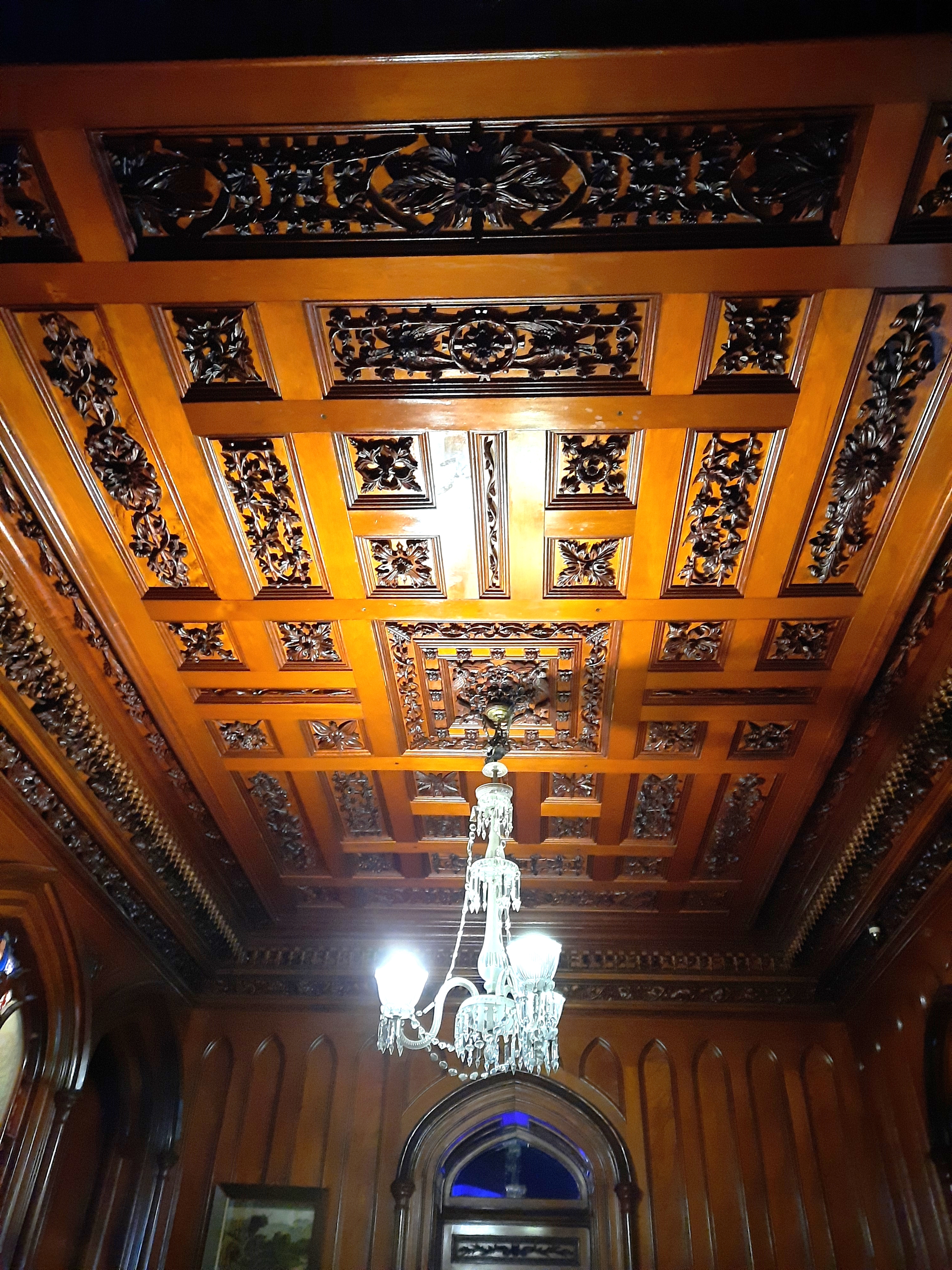
While the castle is glorious and the location is spectacular, it is all the interior detail I loved the most. Birds in domed display cases, sumptuous furniture and accessories, and totally over-the-top interiors are just some of the delights.

As the website says: “Materials from all over the world were used – marble from Italy, slate from Wales, floor tiles from England, glass from Venice and France. No expense was spared in creating Larnach’s dream home! Many New Zealand native woods were also used – kauri ceilings, rimu floors and honeysuckle panelling. In 1885 a 3,000 square foot Ballroom was added.”
Since 1900, the castle has had many uses, “as a lunatic asylum, a hospital for shell-shocked soldiers and a nuns’ retreat. The Ballroom was once even used as a sheep holding pen!”, before falling into decline. 

Three cheers for the Barker family, for six decades of dedicated renovation to bring the derelict mansion back to its current extraordinary state.

William Larnach doesn’t appear in my latest novel, Murder in the Devil’s Half Acre, but he does provide some inspiration for the characters and locations.

His own history would scarcely be believed if it was written as a novel. He started as a banker (his bank on the Australian goldfields was “a tent and his equipment consisted of dogs, a gun, and strong boxes”), before moving to New Zealand when gold was discovered in the 1860s. From there he expanded into shipping, farming, landholding, politics, speculation and a career in politics.

Unfortunately, it didn’t end well. Economic depression led to financial difficulties, drinking and depression. In 1898, Larnach locked himself in a committee room at Parliament and shot himself with a revolver. His final legacy to the world of Victorian excess was the enormous mausoleum in the Dunedin Northern Cemetery, a miniature replica of Robert Lawson’s First Church.

Agog as I am at the ostentatious wealth of the era, my own interest is at the other end of the spectrum – the tarnished reverse side of the shiny coin of economic wealth. The machinery of mass production put many skilled workers out of a job or forced them into unskilled labour or, if things got really dire, workhouses. Others took the courageous decision to emigrate to British colonies, like New Zealand – a migration that had profound consequences for the indigenous population as well as the new immigrants.

While the divide between rich and poor persisted in New Zealand (as it still does), the balance of power was tipped towards workers, who were a scarce resource, and women, who were an even scarcer resource.
Thus, the late Victorian era was also a time of great social change here, achieving advances in workers’ rights and women’s suffrage that would not have been possible in other countries.

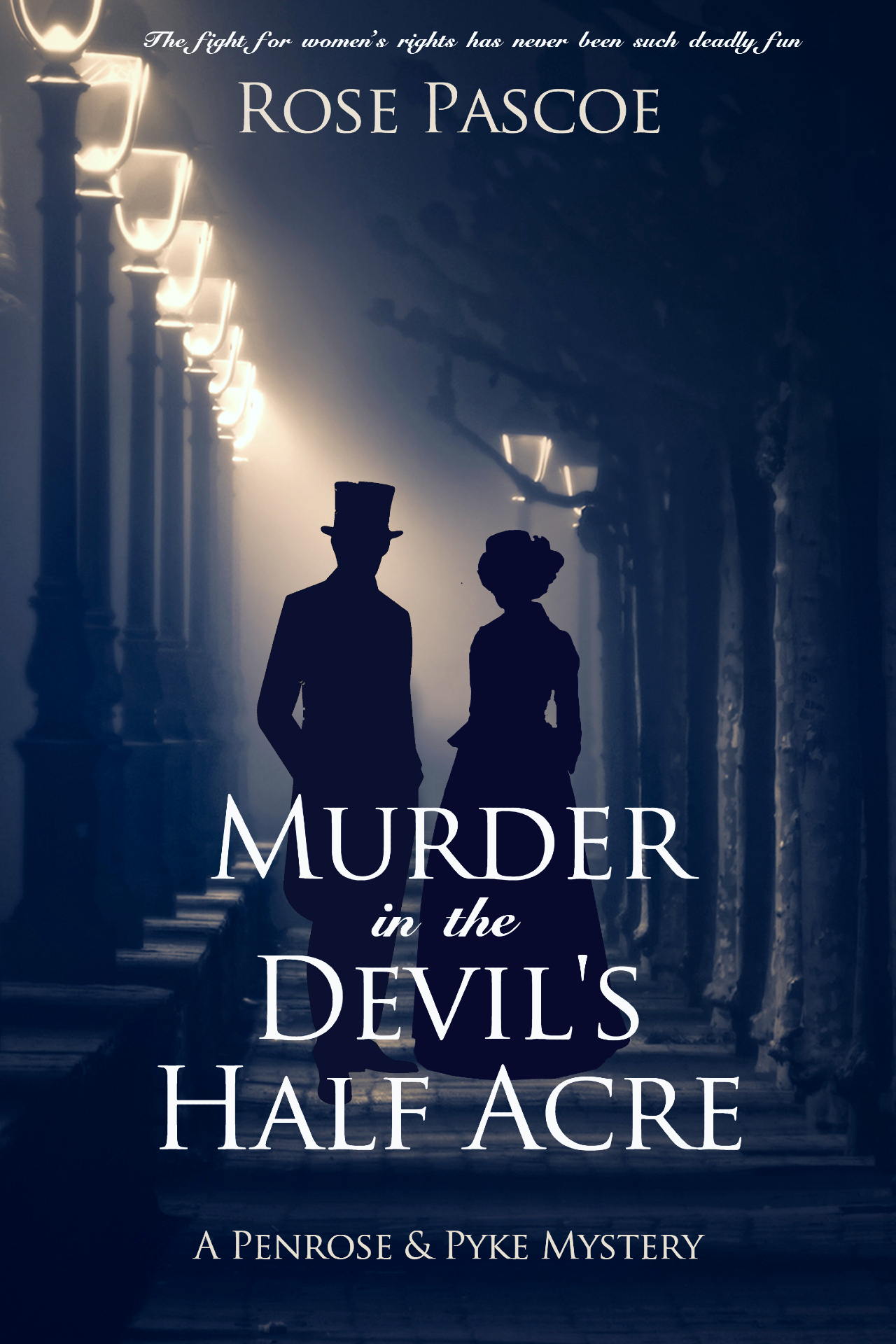
A great source of pride to Kiwis and, happily for me, a rich vein of background material to plunder for the first three books in the Penrose & Pyke Mystery series. The first book (with a workers’ rights theme) will be released this week. Thank you to all the lovely readers who have pre-ordered it. I hope you enjoy it!

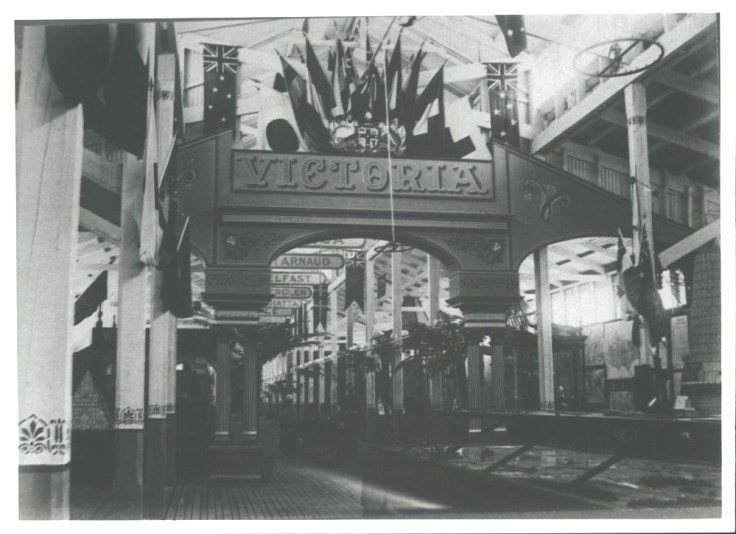
NZ & South Seas Exhibition, 1889-90

As soon as I read about the marvellous New Zealand and South Seas Exhibition, I knew it was perfect place for a scene in Murder in the Devil’s Half Acre.

"Eiffel Tower", New Zealand and South Seas Exhibition (Source: Hocken Library)

Grand exhibitions were all the rage in the 1800s, showing off the extraordinary innovation and prosperity of the Victorian period. The Dunedin event was hard on the heels of the 1889 World Fair in Paris, for which the iconic Eiffel Tower was built. Not to be outdone by the French, Dunedin constructed a replica Eiffel Tower, albeit scaled-down to 40 metres and made of wood. Featuring a steam-powered lift, which carried 16 people up to a height of 30 metres, and electrically-powered lights on the viewing platforms, it was a smash hit.

New Zealand and South Seas Exhibition (Source: Hocken Library)

The NZSS Exhibition also had a switchback railway (the humble precursor to roller-coasters – a bit of it can be seen in the photo above), a merry-go-round, musical entertainment, gardens and exhibits of everything imaginable from around New Zealand and the world.

The event was so popular that more visitors were said to have gone through its gates than the entire population of New Zealand at the time.

Entrance, New Zealand and South Seas Exhibition (Source: Hocken Library)

One can only imagine the wonder and excitement on their faces as they approached the Moorish-domed entrance!

A huge thank you to The Lothians blog for detailed information about a fascinating, but little-known, piece of history: https://the-lothians.blogspot.com/2016/06/the-new-zealand-and-south-seas.html.

A Win for the Workers

The next time you’re burning the midnight oil at work, spare a thought for how it used to be, when the ‘midnight oil’ was a feeble lamp lighting the piecework taken home by women after a long day on the factory floor. And give thanks to the campaigners for workers’ rights, who fought hard for better conditions (and who still do so).

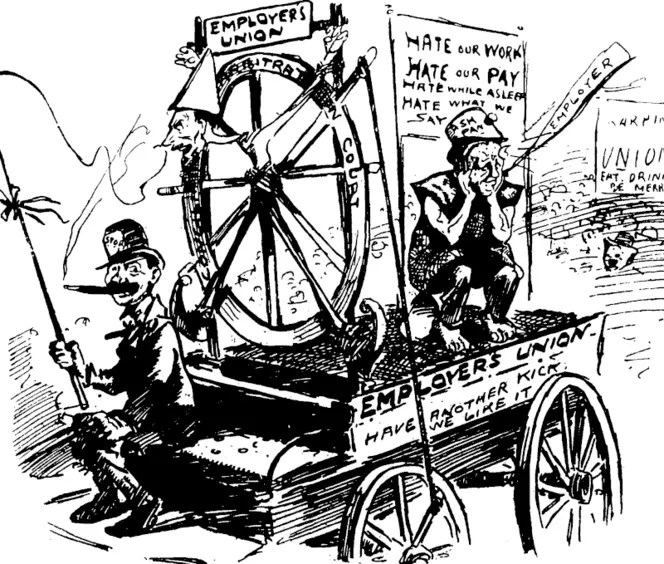
My new book, Murder in the Devil’s Half Acre, was inspired by the events of 1890, in New Zealand’s biggest and wealthiest city (at the time), Dunedin. Many workers slaved for long hours in appalling conditions, although arguably with better conditions than they had faced in Britain, from whence most of the population had immigrated since 1840. Some workers even managed to get an eight-hour day, as first celebrated fifty years later, in October 1890, by our first Labour Day. (The cartoon lampooning the Employers’ Union Labour Day float is from the Alexander Turnbull Library.)

After the depression years of the 1880s, any job was better than none, even if the pay scarcely covered a subsistence living. Families often fended off starvation by sending their women and children to work.

Enter the Reverend Rutherford Waddell and his widely publicised sermons on the ‘Sin of Cheapness’. Waddell was the minister of the St Andrew’s parish, in an area so notorious for drinking and debauchery that it became known as the Devil’s Half Acre. It was so bad that Walker Street, which is the epicentre of events in the story, was later renamed Carroll Street in an attempt to blot out the taint. (Waddell photo courtesy of the Alexander Turnbull Library.)

Waddell’s powerful advocacy helped to establish the first union for working women, the Dunedin Tailoresses’ Union. The first vice-president of the union was Harriet Morison, one of New Zealand’s (and the world’s) pioneering feminists, who later played an important role in the campaign for women’s suffrage and the temperance movement. (Harriet Morrison photo courtesy of the Alexander Turnbull Library.)

The government responded by setting up the Sweating Commission, which first convened in Dunedin on the tenth of February 1890, with Waddell as one of the commissioners.

Here’s a sample of one inspection by the Sweating Commission: ‘Factory crowded to excess. Badly lighted, and not ventilated. The building has three flats. In the upper one the sewing girls and clickers are in one room, and some of the employees are juvenile in appearance. The ground-floor is crowded with machinery and men, and the cellar is utilised as workroom for considerable number of men. The cellar from floor to ceiling is not more than 6ft. high, and two boys there are practically working in the dark.’

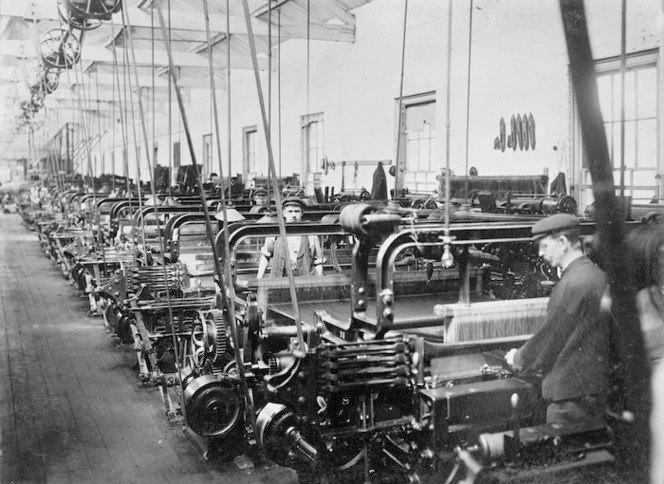
The photos below, of women working a clothing factory and looms at a woollen mill, are from the early 1900s, when conditions had improved significantly (Source: Alexander Turnbull Library).

The commission concluded that sweating did not exist, in the sense of the accepted definition, albeit with three dissenting commissioners, including Waddell. However, the evidence of long hours, poor conditions and inadequate pay was undeniable. The Liberal government subsequently made significant changes to labour laws, including the Factories Acts of 1891 and 1894.

For anyone interested, I’d highly recommend Ian Dougherty’s fascinating biography of Waddell – Pulpit Radical: The Story of New Zealand Social Campaigner, Rutherford Waddell (2018, Saddle Hill Press, Dunedin, New Zealand).

Website Built with WordPress.com.

Up ↑